
By Simon Harris
The way people order everyday essentials has changed dramatically over the past few years. Customers no longer want separate apps for food delivery, grocery shopping, medicine orders, courier services, or local store purchases. Instead, they expect everything to be available in one seamless digital experience. This shift in consumer behavior has fueled the rapid growth of multi-delivery services apps, which combine multiple delivery categories into a single platform.
For businesses and startups, launching a multi-delivery services app is only the first step. The real challenge lies in maximizing its potential—improving user engagement, streamlining operations, increasing order volume, and ensuring long-term profitability. Whether you are an entrepreneur, app owner, or operations manager, understanding how to fully leverage your multi-delivery app can make the difference between average performance and market leadership.
This ultimate guide explores proven strategies, best practices, and practical insights to help you get the most from your multi-delivery services app while delivering exceptional value to both customers and service partners.
A multi-delivery services app is designed to offer convenience, speed, and variety under one digital roof. It connects customers with multiple service providers such as restaurants, grocery stores, pharmacies, couriers, and local vendors. The success of such an app depends on how effectively it balances customer needs, partner expectations, and business goals.
To maximize value, app owners must focus on creating a user-friendly interface, reliable logistics, flexible payment options, and strong backend management tools. When these elements work together smoothly, the app becomes an essential part of users’ daily lives rather than just another download on their phone.
User experience is the backbone of any successful multi-delivery services app. If customers find the app confusing or slow, they will quickly switch to competitors.
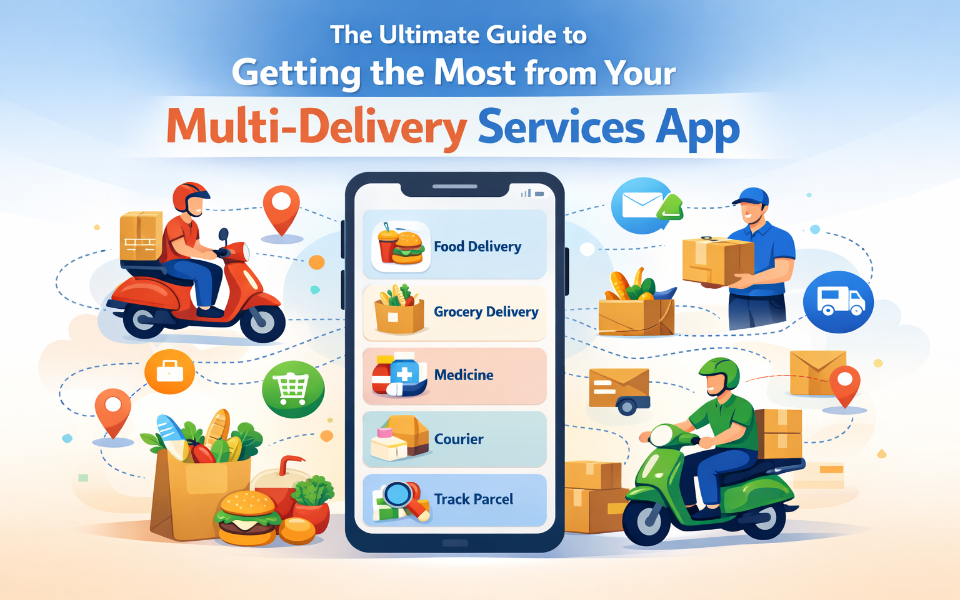
A clean and intuitive layout helps users find services quickly. Categories such as food, grocery, medicine, and courier services should be clearly displayed on the home screen. Smart search and filters allow users to locate products, stores, or services without unnecessary steps.
App speed plays a critical role in customer satisfaction. Optimizing app performance, reducing load times, and ensuring stability during peak hours can significantly improve retention rates.
Personalization features such as order history, recommended stores, favorite items, and customized offers make the app feel tailored to each user. This not only enhances convenience but also increases repeat usage.
One of the biggest advantages of a multi-delivery services app is its ability to support multiple service types. However, adding too many categories without proper planning can reduce efficiency.
Before introducing new delivery categories, analyze customer behavior and local demand. For example, adding medicine delivery in areas with limited pharmacy access can significantly boost adoption.
Quality partners are essential for maintaining service standards. Choose vendors and service providers who can meet delivery timelines, maintain product quality, and follow platform guidelines.
Instead of launching all services at once, expand step by step. This allows you to test operations, fix issues, and refine workflows before scaling further.
Data is one of the most powerful tools available to multi-delivery app owners. Proper use of analytics can uncover hidden opportunities and improve overall performance.
Analyzing order frequency, preferred categories, peak ordering times, and customer drop-off points helps optimize app design and promotions.
Data insights can help determine competitive pricing strategies, delivery charges, and commission structures that benefit both the platform and service partners.
Monitoring delivery times, cancellation rates, and partner performance allows businesses to identify bottlenecks and take corrective actions quickly.
Efficient delivery operations are critical to building trust and reliability.
Automated order assignment ensures that delivery partners receive tasks based on location, availability, and workload, reducing delays.
Providing real-time order tracking increases transparency and customer confidence. It also reduces support queries related to order status.
Using AI-powered route optimization minimizes delivery time and fuel costs, improving profitability while enhancing customer satisfaction.
Service providers and delivery drivers are the backbone of a multi-delivery services app.
A simple registration and verification process encourages more vendors and drivers to join the platform.
Incentives such as bonuses, peak-hour rewards, and performance-based commissions motivate partners to deliver better service.
In-app notifications, dashboards, and support channels help partners stay informed and engaged with the platform.
Payment convenience plays a major role in conversion rates.
Offering options like credit/debit cards, digital wallets, UPI, cash on delivery, and in-app wallets ensures accessibility for a wide range of users.
Implement robust security measures such as encryption and secure gateways to protect user data and build trust.
In-app wallets, cashback offers, and loyalty rewards encourage users to keep funds within the platform, increasing repeat transactions.
Marketing is essential to stand out in the competitive multi-delivery market.
Personalized discounts, first-order offers, and category-specific deals can attract new users and re-engage existing ones.
Timely notifications about offers, order updates, and new services keep users engaged without being intrusive.
Collaborating with local vendors and promoting hyper-local offers helps build a strong presence in specific regions.
Strong customer support can turn negative experiences into positive ones.
Live chat, AI chatbots, and ticket systems provide quick assistance and reduce frustration.
Fast resolution of order issues, refunds, and complaints builds long-term trust and loyalty.
Customer feedback helps identify pain points and areas for improvement, guiding future updates and enhancements.
As your app grows, scalability becomes crucial.
Cloud infrastructure and modular architecture allow the app to handle increasing users and orders without performance issues.
AI, machine learning, and automation can enhance personalization, demand forecasting, and delivery efficiency.
Localization features such as language support, currency options, and region-specific services make expansion smoother.
Operating a multi-delivery services app involves legal and regulatory responsibilities.
Ensure compliance with food safety, pharmacy regulations, and delivery laws in each operating region.
Strong data privacy policies and transparent practices are essential for building and maintaining trust.
Clear terms, refund policies, and partner agreements reduce disputes and improve platform credibility.
A multi-delivery services app has the potential to become an indispensable part of modern digital life—but only when managed strategically. From optimizing user experience and expanding services thoughtfully to leveraging data, strengthening logistics, and engaging partners effectively, every aspect of the platform contributes to its success. By focusing on convenience, reliability, personalization, and scalability, businesses can unlock the full potential of their multi-delivery services app, driving sustainable growth and long-term customer loyalty in an increasingly competitive market.
A multi-delivery services app is a single platform that allows users to order multiple services such as food, groceries, medicines, and courier deliveries from different vendors using one app.
You can improve retention by offering a smooth user experience, personalized recommendations, loyalty rewards, fast deliveries, and reliable customer support.
Expanding gradually is recommended. It allows you to test operations, improve performance, and manage resources efficiently before scaling.
Data analytics is crucial as it helps optimize pricing, understand customer behavior, improve operations, and make informed business decisions.
Scalability depends on robust technology, efficient logistics, strong partner management, secure payments, and adaptability to market demands.