
By jhones michal
Visualizing villa landscaping details is a critical part of luxury residential design. Landscaping is not only decorative but also functional, shaping privacy, comfort, and the overall living experience. While drawings and digital renders provide guidance, they often fail to communicate depth, scale, and spatial relationships fully.
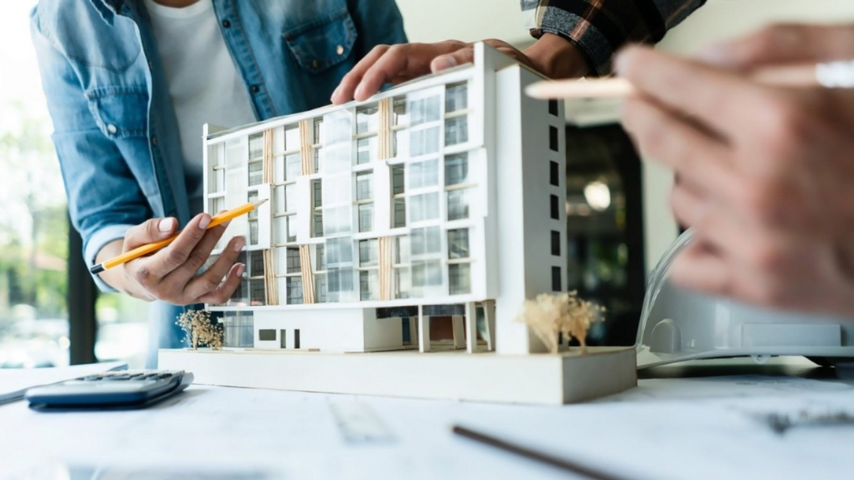
Physical models offer a clear and tangible way to understand how landscaping elements interact with the villa architecture and surrounding environment. This is where model making becomes an effective visualization tool.
Villa plots often include changes in elevation, sloped terrain, or stepped outdoor areas. Scale models help designers and clients understand how the landscape responds to these site conditions. Contours, retaining walls, and level changes are easier to interpret in three dimensions. This allows stakeholders to see how terraces, lawns, and pathways adapt naturally to the land.
Luxury villas usually divide outdoor areas into functional zones such as entertainment spaces, private gardens, service areas, and relaxation zones. Scale models clearly show how these zones are arranged around the villa. The relationship between indoor spaces and their corresponding outdoor areas becomes more apparent, helping confirm whether the layout supports the intended lifestyle.
One of the challenges in landscape design is communicating plant density and placement. Scale models use symbolic trees, shrubs, and green textures to indicate planting strategies. This helps visualize how greenery frames views, softens building edges, and creates shaded areas. Through model making Dubai, designers can test whether landscaping feels lush, balanced, or too crowded.
Privacy is a major consideration in villa landscaping, especially in high-density residential areas. Physical models make it easy to show how hedges, trees, walls, and screens protect private spaces. Clients can immediately understand sightlines from neighboring plots and public areas. This clarity supports better decisions about plant height and boundary treatments.
Pathways connect entrances, gardens, pools, and service zones. Scale models illustrate how these routes flow around the villa. Curved paths, stepping stones, and driveway alignments are easier to assess physically. This visualization ensures that movement through the landscape feels logical and comfortable.
Water features such as pools, fountains, and reflecting ponds are central to many villa landscapes. Scale models show their placement, proportions, and relationship to living spaces. Designers can evaluate whether a pool feels dominant or balanced within the garden. The interaction between water, planting, and architecture becomes clearer through model making.
Tree placement influences shade, cooling, and visual comfort. Scale models help demonstrate how trees relate to outdoor seating areas and building façades. By studying tree locations, designers can assess shaded zones and open sunny spaces. This supports better decisions for comfort in outdoor living areas.
Luxury villas rely on a seamless transition between built form and nature. Scale models allow designers to study how terraces, pergolas, and garden edges align with the villa structure. This physical connection helps ensure that landscaping enhances architectural features rather than competing with them.
Many clients find landscape drawings difficult to interpret. Physical models simplify communication by offering an intuitive visual reference. Clients can point to specific garden areas, ask questions, and suggest changes with confidence. This shared understanding reduces revisions later and improves satisfaction with the final design.
Landscape design often evolves through multiple options. Scale models make it easy to compare different planting layouts, pathway arrangements, or pool positions. Viewing alternatives side by side highlights subtle differences that may not be obvious in plans. This process supports informed decision-making through model making.
Landscape elements such as boundary treatments, setbacks, and green coverage may require approval. Scale models help authorities and consultants quickly understand proposals. Clear visualization reduces ambiguity and supports smoother discussions during review stages.
Identifying landscape issues early helps avoid costly changes during construction. Scale models reveal potential conflicts such as overcrowded planting, awkward circulation, or poor outdoor proportions. Addressing these issues at the design stage improves overall project efficiency.
Villa landscaping plays a vital role in shaping luxury living environments, and clear visualization is essential for successful outcomes. Physical models bring clarity to terrain, planting, privacy, and outdoor circulation in ways that drawings alone cannot achieve.
When used effectively, model making transforms landscape concepts into understandable and engaging representations, supporting confident decisions and refined villa designs.