
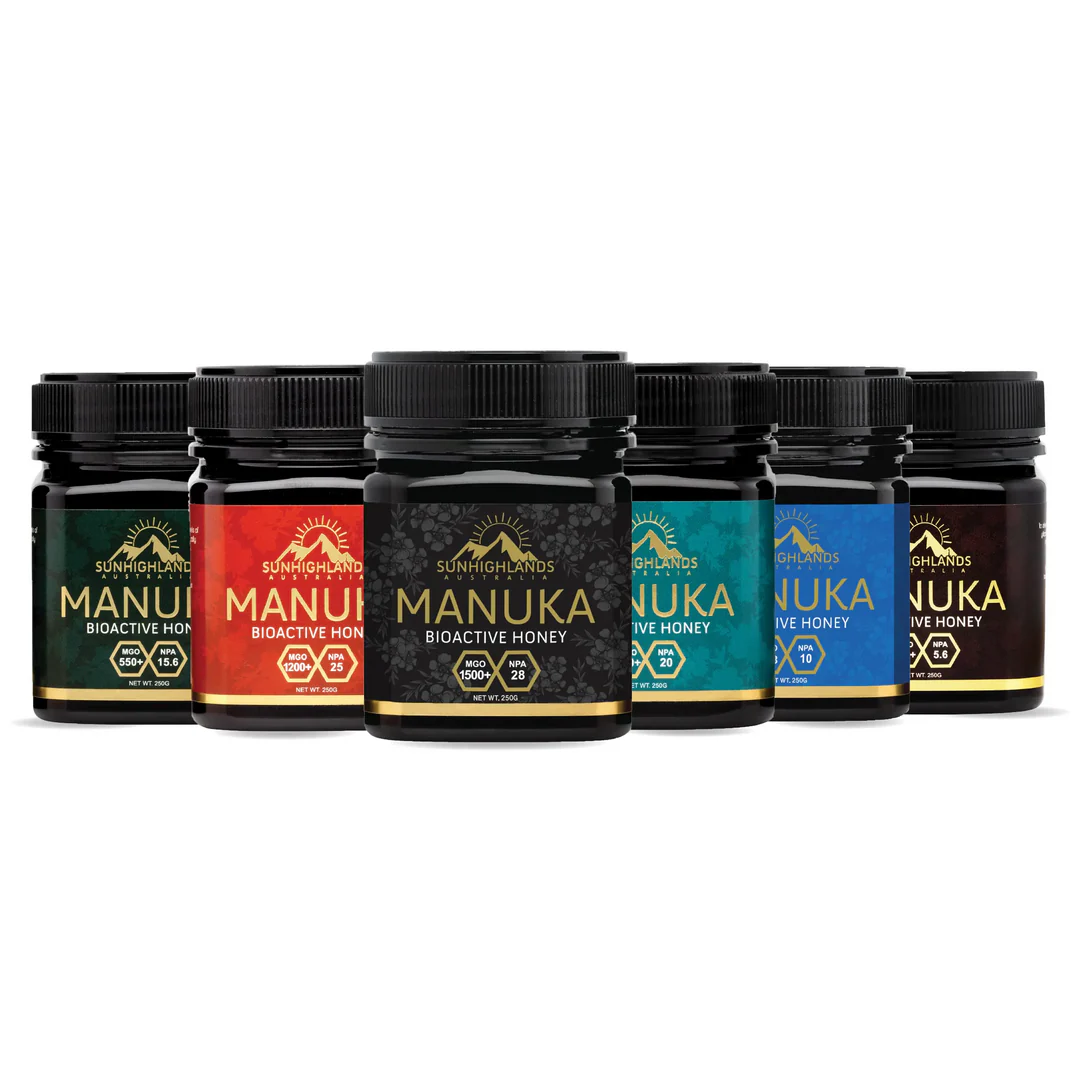
By Sunhighlands
Manuka honey has become one of the most recognised natural products associated with Australia. Its growing reputation is closely linked to the unique environments where it is produced and the methods used to harvest it.
When Australians talk about the best manuka honey.
The focus is usually not on branding or presentation, but on origin, handling, and how closely the honey reflects the landscape it comes from.In Australia, manuka honey is produced when bees collect nectar from native Leptospermum plants.
These plants grow naturally in specific regions, particularly across parts of New South Wales. Coastal bushland areas benefit from clean air. Native vegetation, and relatively stable conditions, while some inland regions offer open, less disturbed environments.
Seasonal rainfall, soil type, and flowering cycles all influence how much nectar is available and how the honey develops.Harvesting methods play an important role in determining honey quality. Many Australian producers use low-temperature extraction rather than high-heat processing.
This method helps preserve the honey’s natural structure and limits unnecessary alteration. As a result, naturally occurring elements such as pollen or traces of propolis may remain.
This approach keeps the honey closer to its original state and is often associated with what people consider the best manuka honey.Unlike industrially processed honey, manuka honey often varies between batches.
Changes in weather patterns, flowering intensity, and seasonal timing can all affect colour, thickness, and flavour. Some batches may appear darker and thicker, while others are lighter and more fluid.
These variations are a natural outcome of working with a product shaped by the environment rather than controlled manufacturing.Another key consideration is how producers handle testing and transparency.
In Australia, laboratory testing is commonly used to identify naturally occurring markers found in manuka honey. This helps provide clarity without altering the honey itself.
Producers focused on quality typically avoid excessive blending. Which allows each batch to reflect the region and season from which it was collected.Taste and texture also influence how manuka honey is perceived.
Australian varieties are often described as having an earthy or herbal flavour profile. Sometimes with subtle bitterness or depth that sets them apart from other honeys.
These characteristics come directly from the native plants bees forage on and can vary depending on location and seasonal conditions.Beekeeping practices are another important part of the discussion.
Responsible producers prioritise hive health, careful placement of beehives, and minimal interference with natural bee behaviour. This approach supports sustainable beekeeping and helps maintain long-term consistency in honey production.
It also reflects a broader respect for the environment and natural processes.Another factor often considered when discussing manuka honey is traceability. Knowing the general region where the honey is collected helps people better understand its characteristics and seasonal differences.
In Australia, regional transparency has become increasingly important as consumers show more interest in natural food sources and how they are handled. This growing awareness has encouraged producers to keep their processes simple and well-documented.
Rather than relying on heavy processing, the emphasis remains on maintaining the honey’s natural profile. This approach aligns with broader food trends that value minimal intervention.
Regional identity, and respect for traditional production methods.Ultimately, identifying the best manuka honey is less about bold claims and more about understanding how the honey is produced. Consumers who take time to learn about sourcing regions.
Extraction methods, and natural variation are better placed to make informed decisions. Australian manuka honey continues to be valued. It reflects the land it comes from, shaped by climate, plants, and careful handling rather than heavy processing.
Further background on regional sourcing and production practices can be found at https://www.sunhighlands.com.au